

Golf has always been a sport that blends patience, skill, and a touch of tranquility. But in today’s fast-paced digital age, even golf has found its way into the world of virtual reality (VR). Imagine being able to tee off at Pebble Beach or St. Andrews without booking flights, paying green fees, or even leaving your living room. That’s exactly what VR Golf brings to the table—a new digital experience where tradition meets innovation.
A New Swing in Technology
When we talk about VR, the first things that come to mind are action-packed video games or immersive simulations. Yet, golf is proving to be a perfect match for this technology. Why? Because the sport is equal parts physical finesse and mental focus.
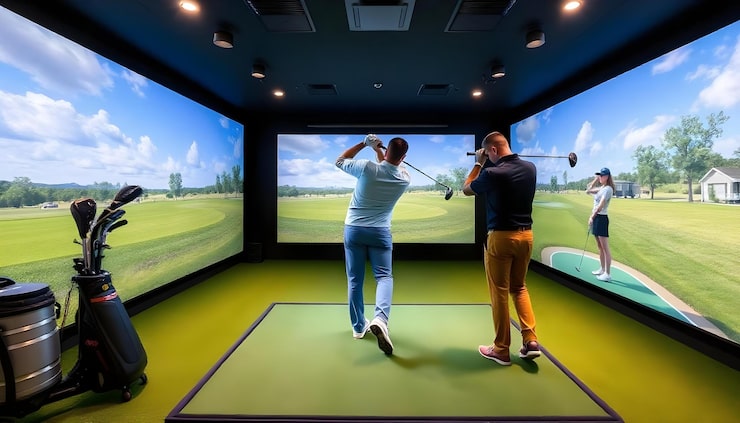
With VR headsets and motion-tracking controllers, you can practice your swing using realistic physics. Every tilt, twist, and follow-through is replicated inside the digital environment. Some advanced VR golf simulators even adapt to your personal habits, adjusting drag, ball trajectory, and club feedback to mimic real-world play.
The Human Side of Virtual Golf
What attracts people to VR Golf is not just the technology, but the experience. For many, golf is more than just a sport—it’s a social activity, sometimes even a form of meditation. Virtual reality manages to keep those elements alive.
Feeling stressed after work? Instead of sitting on the couch doomscrolling, you could be “walking” across a sunlit fairway, playing a round with friends virtually. Even if those friends live across the country, multiplayer VR experiences allow you to share laughs, discuss strategy, and enjoy meaningful interactions. It’s not just about chasing a ball; it’s about creating a sense of presence and connection.
Learning Made Accessible
New golfers often face two hurdles: cost and confidence. Golf clubs, membership fees, and travel expenses make traditional golf an expensive hobby. On top of that, beginners may feel intimidated stepping onto a real course surrounded by seasoned players.
That’s where VR Golf plays a crucial role. With affordable VR gear, newcomers can practice swings, learn rules, and build muscle memory from home. Virtual coaches and built-in tutorials guide players step by step, making the learning curve less steep. By the time a beginner hits a real-world course, they’re already comfortable with the basics.
Health, Fitness, and Fun
Another underrated benefit of VR Golf is the subtle fitness element. While it’s not as physically demanding as a gym workout, you’re still moving your arms, legs, and core with each swing. Some VR setups encourage walking in place or using treadmills to simulate movement across the course, adding a surprising workout bonus.
At the same time, VR Golf provides mental relaxation. The immersive landscapes—whether a calm beachside course or a majestic mountain setting—offer a digital escape from daily stress. It’s an activity that blends leisure, focus, and wellness all in one.
The Future of VR Golf
Looking ahead, VR Golf is positioned to grow as hardware becomes lighter, more affordable, and more advanced. Imagine AI-powered swing analyzers giving instant feedback, haptic feedback gloves simulating the exact feel of a club, or even mixed-reality environments where physical and digital elements blend seamlessly.
The future is not about VR replacing golf but about expanding the experience—making it accessible to more people worldwide while preserving the heritage of the sport.
Conclusion: A Hole-in-One for Technology and Humanity
VR Golf shows us how technology can enrich—not replace—human experiences. It isn’t about pixels versus grass, but about creating opportunities to enjoy golf in new ways. For beginners, it’s a safe entry point; for experienced players, it’s a chance to practice anywhere; for friends and families, it’s a way to bond beyond geographical limits.
At its core, VR Golf proves that even in a digital age, technology can help us stay connected to tradition, wellness, and each other. It’s not just a game—it’s a bridge between worlds, both real and virtual.